

 Login
Login


 SmartOne Solar
 SmartOne C
 STX3
STX3 STX3 Dev Kit
 SPOT X
 SPOT Gen4
 SPOT Trace
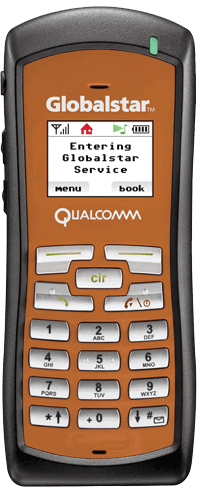
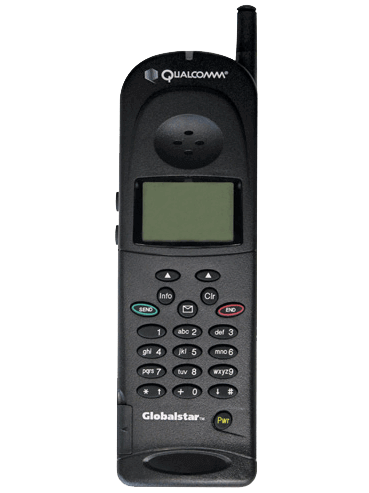
Satellite Handheld Devices: ROI and Market Momentum
In many organizations, connectivity has historically been evaluated through a narrow lens. Coverage maps, device costs, and monthly service fees have tended to anchor the conversation. That framework works reasonably well in environments where connectivity is assumed to be available and reliable.
But that assumption begins to break down in the very places where communication matters most.
Across industries like energy, utilities, transportation, and public safety, teams are operating in environments where terrestrial networks are inconsistent or entirely absent. In those conditions, the absence of connectivity is not simply an inconvenience. It introduces operational blind spots that carry measurable financial, safety, and regulatory consequences.
As a result, the conversation around satellite handheld devices has evolved. Rather than being viewed as a niche or backup solution, they are increasingly evaluated as part of a broader strategy to extend reliable communication into areas where traditional networks cannot reach.
Moving Beyond Line-Item Cost Comparisons
One of the reasons satellite handheld devices have historically been undervalued is that they are often compared directly to lower-cost alternatives, particularly cellular-based solutions. On paper, those comparisons can make satellite devices appear expensive.
However, this approach overlooks the conditions in which these devices are actually deployed.
When a workforce operates outside consistent coverage, the relevant comparison is not between two equivalent communication options. It is between having reliable communication and having none at all. In that context, the cost discussion shifts from substitution to consequence.
For example, consider a remote energy site or a transportation route that extends beyond cellular coverage. If a worker is unable to report an incident, request assistance, or confirm status, the downstream impact can include delayed response times, unreported safety issues, and operational disruptions that extend far beyond the initial event.
When those risks are quantified, even conservatively, the cost of deploying satellite handheld devices begins to align more closely with risk management than with traditional communications spending. The devices are not simply enabling communication; they are reducing the likelihood and severity of costly failures.
Expanding the Definition of Total Cost of Ownership
A more accurate understanding of total cost of ownership requires looking beyond hardware and service fees to include the operational realities these devices are designed to address.
In environments with inconsistent coverage, organizations often rely on workarounds to compensate for communication gaps. These can include manual check-in procedures, redundant systems, or additional personnel tasked with monitoring and coordination. While these approaches may not appear as direct line items associated with connectivity, they introduce inefficiencies that accumulate over time.
Satellite handheld devices help eliminate many of these inefficiencies by providing a consistent and predictable communication channel. Teams can operate with greater confidence that messages will be sent and received, regardless of location. This reduces the need for contingency processes and allows workflows to be streamlined in ways that are difficult to achieve with intermittent connectivity.
There is also a durability factor that contributes to long-term cost considerations.
Devices designed for satellite communication are typically built for harsh environments and extended field use, which reduces the frequency of replacement and the operational disruption associated with device failure. Over time, this reliability contributes to a more stable and predictable cost structure.
In field environments, durability extends beyond ruggedized hardware to include dependable, long-lasting power. Satellite handheld devices are engineered for low-power operation, enabling extended battery life that supports longer use without frequent charging – something standard smartphones are not designed to deliver. In remote or high-risk settings where access to power is limited, this reliability becomes critical.
Rather than functioning as standalone tools, these devices are often integrated into a broader connectivity strategy, complementing cellular where available and ensuring continuous communication when it is not. The result is a more resilient, purpose-built solution that maintains performance where consumer-grade devices fall short.
Understanding the Role of Risk Mitigation
The most significant source of value for satellite handheld devices often lies in their ability to reduce operational and organizational risk.
In remote or high-consequence environments, the inability to communicate introduces a range of exposures. These can include delayed emergency response, incomplete incident reporting, and gaps in situational awareness that affect decision-making at both the field and management levels.
Satellite handheld devices address these exposures by ensuring that communication remains available even when other networks are not. This continuity allows organizations to maintain visibility into field operations, respond more quickly to emerging issues, and document events in a way that supports both internal processes and external accountability.
Importantly, this is not limited to extreme scenarios. Even routine operations benefit from consistent communication, as it enables more accurate coordination, reduces uncertainty, and supports a higher standard of operational discipline. Over time, these incremental improvements contribute to a measurable reduction in risk across the organization.
The Growing Importance of Compliance and Accountability
Regulatory requirements are increasingly shaping how organizations approach field communications. In many industries, there is a growing expectation that companies can demonstrate not only that safety and operational protocols exist, but that they can be executed reliably in all operating conditions.
For example, OSHA 1915.84 indicates that lone workers must be accounted for by the organization either by sight or verbal communication.
Duty-of-care obligations require organizations to maintain a level of oversight and responsiveness. Using OSHA as an example again, serious violations can result in fines per incident, and willful or repeated violations can escalate significantly (often resulting in fines tens or hundreds of thousands of dollars). These obligations cannot reasonably be achieved if communication is dependent on inconsistent network availability.
Satellite handheld devices support these requirements by providing mechanisms for regular check-ins, location tracking, and emergency signaling. These capabilities allow organizations to document compliance with safety protocols and to respond appropriately when issues arise.
As regulatory scrutiny continues to increase, the ability to demonstrate consistent communication coverage is becoming less of a differentiator and more of a baseline expectation.
From Standalone Solution to Integrated Connectivity Strategy
Another factor contributing to the growing adoption of satellite handheld devices is the way they are being integrated into broader connectivity strategies.
Organizations are no longer relying on a single network or technology to meet all communication needs. Instead, they are building layered approaches that combine cellular networks, private wireless systems, satellite IoT, and edge computing platforms.
Within this ecosystem, satellite handheld devices serve a specific and essential function. They provide direct, human-level connectivity in environments where infrastructure-based solutions are either unavailable or insufficient. This makes them a natural complement to systems that focus on asset tracking, automation, or data collection.
By integrating handheld devices into this broader framework, organizations can create a more resilient and comprehensive communication environment that supports both people and systems across a wide range of operating conditions.
Market Momentum Reflects a Growing Need
The increasing adoption of satellite handheld devices is not simply the result of incremental improvements in technology. It reflects a broader shift in how organizations evaluate connectivity.
Rather than focusing solely on performance under ideal conditions, there is a growing emphasis on reliability under constraint. Organizations are recognizing that connectivity strategies must account for the realities of where work actually takes place, not just where networks are strongest.
As this perspective becomes more common, satellite handheld devices are being recognized for what they offer in practical terms: a dependable means of communication that extends beyond the limits of terrestrial infrastructure.
The Shift from Optional to Operational
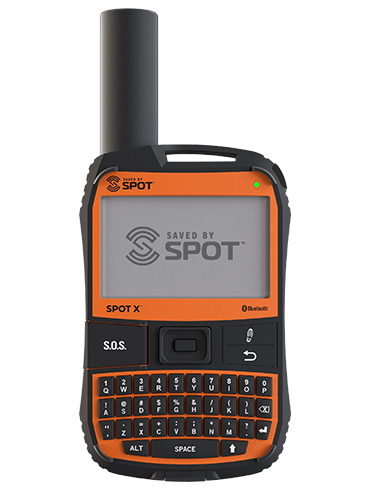
When viewed through a traditional cost lens, satellite handheld devices such as Globalstar’s SPOT X can appear to be a specialized or optional investment. When viewed through the lens of operational continuity, risk management, and compliance, their role becomes much more central.
They are not intended to replace existing communication systems, but to reinforce them by covering the gaps that those systems inevitably leave behind.
In doing so, they help ensure that critical communication remains available in the moments and locations where it matters most. Ready to learn more? Download this user guide on how to choose the right satellite communication device for you.

