

 Login
Login


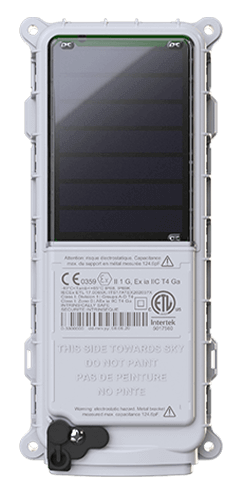 SmartOne Solar
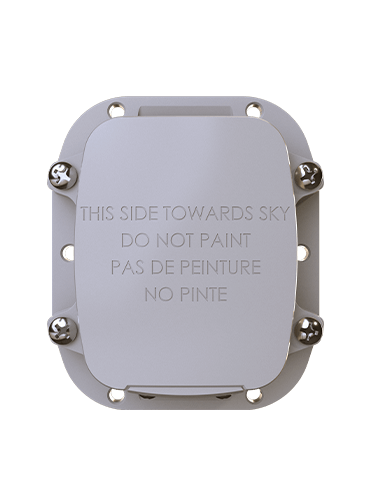 SmartOne C
 STX3
STX3 STX3 Dev Kit
 SPOT X
 SPOT Gen4
 SPOT Trace


Bridging Cellular Dead Zones: Why Coverage Gaps are Still a Business Problem
For most organizations, connectivity is assumed to be a given. Devices connect, data flows, and operations move forward without interruption. That assumption holds in urban and well-served areas, but it begins to break down as soon as operations extend beyond consistent cellular coverage.
Cellular dead zones are not rare edge cases, but instead a predictable feature of how networks are built. Even in developed markets, coverage is not uniform. The Federal Communications Commission repeatedly highlighted gaps in rural and remote connectivity, particularly in areas where terrain, distance, or economics limit infrastructure investment.
Globally, the GPS estimates that while mobile networks reach the majority of the population, geographic coverage still leaves large portions of landmass and industrial operating areas without reliable service.
For organizations operating across transportation routes, energy infrastructure, agricultural land, or offshore environments, these gaps are part of daily operations.
The Hidden Operational Cost of Unreliable Coverage
Cellular dead zones rarely show up as a line item in a budget, but their impact is measurable. When communication drops due to visibility being lost, teams are forced to rely on manual processes, delayed reporting, or incomplete data. Over time, this affects coordination, response times, and overall efficiency.
In logistics and field operations, for example, a lack of real-time visibility can lead to missed updates, delayed deliveries, and underutilized assets. Industry research from McKinsey and Company has shown that improved visibility and digital coordination can reduce logistics costs by up to 15 percent, highlighting just how much inefficiency is tied to gaps in information.
In industrial environments, the stakes can be even higher. Unplanned downtime can cost anywhere from $10,000 to $500,000 per hour, depending on the operation, according to Aberdeen Strategy and Research. When connectivity gaps delay issue detection or response, those costs escalate quickly.
And these are not unique cases. They are inherent risk of relying on a network that was never designed to provide universal coverage.
Why Traditional Operations Fall Short
Organizations have long attempted to work around connectivity gaps rather than solve them directly. Common approaches include:
- Expanding cellular coverage through additional infrastructure
- Relying on Wi-Fi in localized environments
- Implementing manual check-in procedures
- Using multiple disconnected communication tools
While each of these approaches can provide incremental improvement, they introduce their own limitations. Expanding infrastructure is often cost- prohibitive or impractical in remote areas. Wi-Fi is inherently limited in range and reliability outside control environments. Manual processes are labor-intensive and prone to error. And fragmented tools create silos rather than a unified view of operations.
For procurement and operations leaders, this creates a familiar challenge. Investments are made to improve connectivity, yet gaps persist. Over time, those gaps become accepted as part of doing business, even as their costs continue to accumulate.
Bridging the Gap with Complementary Connectivity
The shift that is now taking place is not about replacing cellular networks, but about complementing them. Satellite connectivity has emerged as a practical way to extend coverage into areas where terrestrial networks cannot reliably reach. Rather than depending on proximity to towers, satellite communication provides a consistent layer of connectivity path operate independently of local infrastructure.
This changes how organizations think about coverage. Instead of asking whether a network is available in most places, the question becomes whether communication can be maintained in all the places that matter. In this model, cellular and satellite are not competing technologies. They serve different roles within a broader connectivity strategy. Cellular remains the primary option where coverage is strong, while satellite fills the gaps that would otherwise create blind spots.
Enabling Continuous Visibility Across Operations
For procurement and management teams, the value of bridging cellular dead zones becomes most clear when viewed through the lens of continuity.
Continuous visibility allows organizations to:
- Track assets across their full journey, not just within coverage areas
- Maintain communication with field teams regardless of location
- Monitor conditions and events in real time
- Reduce reliance on manual reporting and follow-up
This continuity has both operational and financial implications. It improves coordination, reduces delays, and supports more informed decision-making. In environments where safety and compliance are critical, it also ensures that communication is not dependent on network availability. This is increasingly important as organizations are expected to demonstrate oversight and responsiveness across all operating conditions, not just those within reliable coverage.
Total Cost of Ownership and Long-Term Value
From a procurement perspective, evaluation solutions to bridge connectivity gaps require a broader view of the total cost of ownership. Satellite-enabled devices may carry different cost structures than traditional cellular solutions, but they address a different problem. They eliminate the need for workarounds, reduce operational inefficiencies, and mitigate risks that are otherwise difficult to quantify until they occur.
When these factors are considered together, the investment is less about adding another layer of cost and more about stabilizing operations. It also introduces predictability. Rather than dealing with intermittent failures and reactive fixes, an organization can operate with a clear understanding of how and where communication will be maintained.
Market Momentum Reflects a Shift in Expectations
The increasing adoption of hybrid connectivity models reflects a broader shift in low organization service network performance. Connectivity is no longer judged solely by speed or bandwidth in optimal conditions. It is judged by reliability across real-world operating environments.
As IoT deployments continue to expand into remote and distributed settings, the expectation of continuous connectivity is becoming more pronounced. Organizations are recognizing that gaps in coverage are not just technical limitations, but operational risks.
Reach out to our team of experts to learn more.

