

 Login
Login


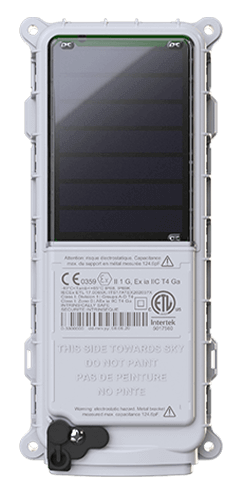 SmartOne Solar
 SmartOne C
 STX3
STX3 STX3 Dev Kit
 SPOT X
 SPOT Gen4
 SPOT Trace


Why Connectivity Resilience Matters in Critical Energy Operations
Energy infrastructure does not operate in forgiving environments. Whether offshore, in remote deserts, across pipelines, or in distributed renewable installations, critical energy assets depend on continuous visibility and control. Yet many of these environments face limited terrestrial coverage, extreme weather exposure, RF congestion, or complete infrastructure absence.
In these conditions, connectivity is a resilience layer.
The Reality of Energy Operations
Energy operators manage:
- Remote wellheads and pump stations
- Offshore platforms and maritime assets
- Transmission lines and substations
- Smart water and electric meters
- Liquid fuel distribution networks serving homes and businesses
Each of these systems generates data that supports safety, regulatory compliance, predictive maintenance, and operational continuity. In many cases, that data flow is not optional.
Smart meters, for example, require reliable two-way communications to meet regulatory requirements. Utilities must be able to collect usage data, validate service status, and, in some cases, remotely configure or disconnect service. Without dependable connectivity, compliance risk increases and operational costs escalate.
Similarly, a significant population relies on the delivery of liquid fuels, oil, natural gas, and propane for home heating, cooking, and survival in cold-weather regions. These fuels move through pipelines and delivery vehicles that must be monitored continuously. A loss of visibility in these systems is not simply an operational inconvenience. It can quickly become a public safety issue.
When communications fail, the impact is immediate: delayed response times, environmental risk, compliance exposure, and potential disruption to essential services.
A resilient connectivity strategy must assume that terrestrial networks will not always be available.
The Cascade Effect of Severe Weather
Storm events provide a clear illustration of why layered communications matter.
The first system to fail is often the electric grid. Shortly after, terrestrial communications infrastructure begins to degrade. Yet tactical coordination, environmental monitoring, and service restoration efforts must continue.
During these events, alternative communications are not optional. They are mandatory.
Without a resilient backup channel, operators may lose insight into:
- Pipeline pressure anomalies
- Substation performance
- Tank levels and fuel availability
- Environmental containment systems
Connectivity resilience ensures that coordination continues even when primary systems fail.
The Role of One-Way Connectivity: Reliable Visibility
In many energy applications, the most critical requirement is outbound telemetry — dependable reporting of asset status.
One-way satellite connectivity provides:
- Pipeline pressure and flow readings
- Environmental monitoring data
- Tank level reporting
- GPS tracking of delivery fleets
- Alarm and exception notifications
This model minimizes power consumption and simplifies deployment. Devices transmit short bursts of essential data at defined intervals, extending battery life and supporting remote installations.
For pipelines, remote fuel depots, and environmental monitoring stations, persistent outbound visibility enables early detection.
Early detection is not just operationally efficient. It minimizes environmental impact.
- A leak identified quickly reduces remediation cost.
- An anomaly detected early limits ecological damage.
- A pressure deviation flagged in real time prevents escalation.
- Resilience at the telemetry layer directly translates into environmental protection.
The Value of Two-Way Connectivity: Control and Compliance
While outbound reporting is foundational, many critical energy systems require controlled intervention.
Two-way satellite connectivity enables:
- Smart meter compliance and remote configuration
- Message rate adjustments during storm events
- Confirmation of alarm receipt
- Remote reconfiguration of monitoring thresholds
- Limited command and control functions
In regulated utility environments, the ability to confirm receipt and adjust configurations remotely is essential. Two-way connectivity supports compliance requirements while reducing the need for field dispatch during hazardous conditions.
For liquid fuel distribution networks, two-way capability can enable fleet monitoring adjustments during extreme weather, improving coordination when terrestrial systems are unstable.
Importantly, this two-way channel complements — rather than replaces — higher-bandwidth terrestrial systems. It provides a resilient fallback for essential control when primary networks are degraded.
Infrastructure Independence as Risk Mitigation
Energy operations span remote terrain, rural communities, and harsh environments. Terrestrial networks may not be present, or may not survive severe events intact.
Satellite connectivity offers:
- Infrastructure independence
- Globally coordinated spectrum
- Predictable performance across geographies
- Reduced reliance on local communications assets
Because satellite systems operate independently of local towers or fiber, they remain available when storms, grid failures, or physical disruption impact terrestrial infrastructure.
For critical energy systems, that independence supports operational continuity when it matters most.
Enabling Smarter, Safer Energy Infrastructure
Resilient connectivity does more than prevent outages. It enables smarter operations.
With consistent telemetry and control, operators can:
- Detect anomalies before failure
- Protect environmental assets
- Ensure regulatory compliance
- Coordinate restoration efforts during emergencies
- Maintain fuel distribution continuity for vulnerable populations
One-way connectivity provides reliable visibility. Two-way capability enables control and compliance.
Together, they create a communications foundation that supports safety, environmental stewardship, and operational resilience across critical energy operations.
When the grid fails and terrestrial networks degrade, essential services must continue.
Connectivity resilience is what makes that possible.
Ready to learn more? Reach out to our team experts to learn more.

