


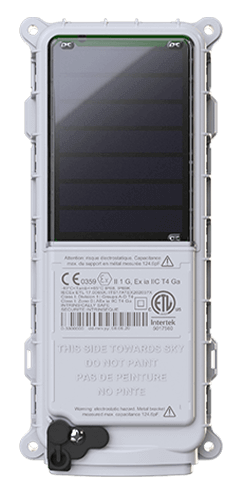
 SmartOne Solar
 SmartOne C
 STX3
STX3
 SPOT X
 SPOT Gen4
 SPOT Trace
Transportation: Extending Visibility Across Every Mile
Transportation networks are under more pressure than ever. Fleets are expected to move faster, operate more efficiently, and provide real-time visibility to customers and partners, all while navigating tighter margins, labor constraints, and increasingly complex routes. At the same time, transportation assets are traveling farther from urban centers, deeper into rural corridors, ports, border regions, and industrial zones, where traditional connectivity becomes unreliable.
As a result, connectivity has emerged as a defining challenge for modern transportation operations. Without consistent communications, visibility breaks down, decision-making slows, and service reliability suffers.
The Growing Demand for End-to-End Visibility
Shippers, logistics providers, and customers increasingly expect continuous insight into asset and cargo location, status, and condition. Real-time tracking, geofencing, condition monitoring, and exception alerts are becoming baseline requirements.
For transportation operators, this data supports more than customer updates. It enables better fleet utilization, faster issue resolution, improved security, and more accurate performance reporting. But these benefits depend on one foundational element: the ability to stay connected across the entire journey.
Where Terrestrial Networks Fall Short
Transportation routes rarely follow the boundaries of cellular coverage. Assets move across highways, rural roads, border crossings, ports, and remote industrial zones where network availability can be inconsistent or nonexistent.
Even when cellular coverage is present, congestion, network handoffs, or infrastructure outages can disrupt communications. These interruptions create blind spots that undermine tracking systems and introduce uncertainty into operations.
For fleets managing hundreds or thousands of moving assets, even short connectivity gaps can accumulate into meaningful operational risk.
Satellite Connectivity as a Complementary Layer
Satellite connectivity extends transportation visibility beyond the limits of terrestrial networks. Rather than replacing existing systems, it complements cellular and Wi-Fi by filling the gaps where coverage is weak or unavailable.
By maintaining communication regardless of location, satellite-connected devices ensure that critical data, such as location updates, status messages, or alerts, continues to flow across the full route. This consistency supports uninterrupted monitoring from origin to destination, even across remote or cross-border journeys.
For transportation operators, this translates into actionable data-driven decision making with fewer unknowns, fewer unknowns and greater confidence in daily operations.
Supporting Last-Mile and Long-Haul Operations Alike
Transportation connectivity challenges are not limited to long-haul routes. Last-mile operations often face their own visibility issues, particularly in rural delivery zones, temporary worksites, or areas with limited infrastructure.
Satellite-enabled monitoring supports both ends of the transportation spectrum. Long-haul assets remain visible across extended routes, while last-mile operations benefit from continued reporting in areas where terrestrial networks struggle to reach.
This unified visibility helps operators manage exceptions, verify deliveries, and respond more quickly to disruptions.
Designed for Scale and Simplicity
Transportation fleets operate at scale, often with limited tolerance for complex integrations or high-maintenance solutions. Connectivity systems must be easy to deploy, power-autonomous – especially on applications where devices are trailer-side, as power is unavailable when disconnected from the cab – and capable of operating for long periods without manual intervention.
This approach enables transportation operators to expand visibility initiatives without adding unnecessary complexity or cost.
Improving Security and Risk Management
Asset security remains a major concern across the transportation industry. Theft, loss, and unauthorized movement introduce financial risk and disrupt supply chains. Consistent connectivity improves security by enabling continuous tracking and timely alerts when assets deviate from expected routes or behaviors. Tamper notifications on the device side provides an efficient early detection warning to someone with ill intentions and increases time to respond, which is critical to recovery.
By reducing blind spots, satellite connectivity strengthens risk management strategies and supports faster response when incidents occur.
A More Resilient Transportation Network
As transportation networks become more interconnected and data-driven, resilience has become a strategic priority. Disruptions, whether caused by weather, infrastructure failures, or network congestion, test the limits of traditional connectivity models.
Satellite communications provide an additional layer of resilience by ensuring that monitoring and reporting continue even when terrestrial networks fail. This redundancy helps transportation operators maintain visibility, protect assets, and uphold service commitments under a wide range of conditions.
For transportation leaders, extending connectivity across every mile is no longer optional. It is essential for delivering reliability, efficiency, and confidence in an increasingly demanding logistics landscape.
Learn more about the convergence of satellite and transportation in this infographic.

