


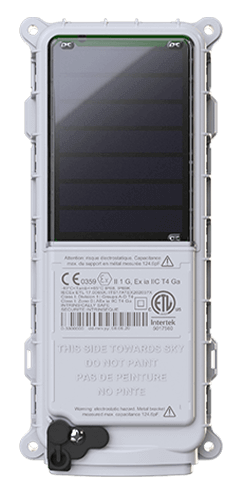
 SmartOne Solar
 SmartOne C
 STX3
STX3
 SPOT X
 SPOT Gen4
 SPOT Trace
The Cost of Inaction: What Connectivity Gaps Really Mean for the Bottom Line
A vehicle moves out of range. A field crew hits a dead zone. An asset stops reporting. A data stream pauses until service resumes. But for organizations operating across distributed, rural, offshore, or mobile environments, those “temporary” gaps accumulate into measurable financial impact.
The real cost of inaction is not the monthly connectivity bill avoided; instead, It is the compound cost of limited visibility, slower decisions, avoidable downtime, and unmanaged risk, and satellite connectivity changes that equation.
Lost Visibility Becomes Lost Revenue
In industries like logistics, energy, utilities, agriculture, and field services, real-time data supports real-time decisions. When assets fall out of coverage:
- Deliveries cannot be verified
- Equipment location cannot be confirmed
- Utilization cannot be measured accurately
- Billing events may be delayed
The absence of data does not just create uncertainty. It disrupts planning and weakens accountability. When leadership lacks full visibility into operations, forecasting becomes less precise. Resource allocation becomes reactive. And over time, that uncertainty translates into lost revenue opportunities and operational inefficiency. Connectivity gaps are not neutral, they degrade performance.
Downtime Costs More Than You Think
Unplanned downtime is one of the most expensive line items in remote operations.
When a remote asset fails without immediate notification:
- Crews may be dispatched unnecessarily
- Spare parts may not be staged properly
- Equipment may sit idle longer than required
- Secondary operations may be delayed
In environments where machinery, vehicles, or infrastructure generate revenue only when active, the lag between failure and awareness is financially significant. Satellite connectivity ensures that data continues to flow even when terrestrial networks fail or do not exist. That persistent visibility reduces response time, shortens downtime, and limits cascading disruption.
The ROI is often found in what does not happen. Imagine removing the margin of downtime that can cost businesses an average of $5,600 per minute.
Safety Incidents Carry Direct and Indirect Costs
Connectivity gaps introduce safety blind spots. In remote environments, teams often operate beyond cellular coverage. When communication is limited, check-ins may fail, emergency alerts may not transmit, situational awareness might drop, and escalation might be delayed. Beyond the human cost, incidents carry regulatory exposure, insurance implications, reputational damage, and operational shutdowns.
Satellite connectivity provides an independent communications layer that does not rely on local infrastructure. It supports worker safety protocols, emergency signaling, and continuous monitoring in areas where terrestrial networks cannot be trusted. From a financial standpoint, mitigating even a single major incident can justify the investment.
Infrastructure Dependency Is a Strategic Risk
Many organizations still architect operations around the assumption that cellular coverage is sufficient.
That assumption breaks down in:
- Disaster scenarios
- Severe weather
- Rural and offshore regions
- Border areas
- Expanding global operations
Terrestrial infrastructure is vulnerable to congestion, damage, and geographic limitations. When that infrastructure fails, organizations without redundancy lose operational continuity.
Satellite connectivity reduces infrastructure dependency. It provides geographic independence and coverage across regions where terrestrial networks are unreliable or absent. From a strategic perspective, this is resilience, which is rapidly becoming a business continuity investment.
Small Gaps Become Compounding Inefficiencies
Connectivity gaps rarely cause immediate catastrophe. Instead, they create friction:
- Manual status calls
- Paper-based reporting
- Data reconciliation delays
- Incomplete asset histories
- Introduces guesswork into the decision-making process
Over time, this friction erodes margins. Disconnected assets lead to underutilization. Incomplete datasets distort performance analysis. Limited telemetry restricts predictive maintenance strategies. Organizations that rely solely on terrestrial networks often do not realize how much operational drag they have accepted.
Satellite connectivity closes those gaps, creating consistent data streams across fleets, equipment, and field personnel. That continuity improves analytics quality, planning accuracy, and long-term optimization.
The Cost of Waiting
The most expensive decision is often not adopting new technology. It is delaying adoption while inefficiencies compound.
Leaders frequently ask:
- Is satellite connectivity necessary?
- Can we tolerate occasional blind spots?
- Is cellular “good enough”?
The better question is:
What is the financial exposure of incomplete visibility?
When assets operate outside coverage, when infrastructure is disrupted, or when operations expand into new geographies, gaps become inevitable. Satellite connectivity is not a luxury layer. It is a foundational layer for distributed, mobile, and mission-critical operations. It supports:
- Continuous asset tracking
- Remote telemetry
- Two-way communications
- Emergency signaling
- Redundant connectivity strategies
And most importantly, it protects the bottom line from silent erosion.
Connectivity as a Financial Strategy
Organizations often frame connectivity decisions as IT upgrades. In reality, they are operational and financial decisions. Connectivity affects:
- Asset utilization rates
- Service level performance
- Safety outcomes
- Downtime duration
- Data accuracy
- Regulatory compliance
Satellite connectivity ensures that operations remain visible, measurable, and controllable regardless of geography. The cost of inaction is rarely obvious in a single budget line. It appears gradually in delayed decisions, inefficiencies, safety exposure, and constrained growth. Closing connectivity gaps is not about adding technology for technology’s sake.
It is about protecting revenue, reducing risk, and enabling scalable operations in a world that does not end at the edge of cellular coverage.
Learn more by reaching out to our team of experts.

