

 Login
Login


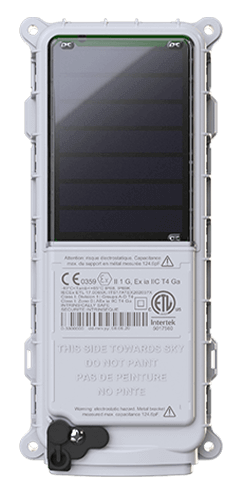 SmartOne Solar
 SmartOne C
 STX3
STX3
 SPOT X
 SPOT Gen4
 SPOT Trace
The Hidden Cost of Lost Visibility in Logistics
In logistics, visibility is currency.
Every container, trailer, pallet, railcar, and vehicle in motion represents value, not just in the goods being transported, but in timing, contractual commitments, customer expectations, regulatory compliance, and operational planning.
When visibility is lost, the cost is rarely immediate and obvious. Instead, it compounds quietly across the supply chain.
Visibility Is Not Just Location
For many logistics operators, “tracking” has traditionally meant GPS location. But modern logistics requires more than coordinates on a map.
Operators now depend on:
- Real-time location updates
- Condition monitoring (temperature, humidity, shock)
- Chain-of-custody tracking
- Dwell time analysis
- Route deviation alerts
- Predictive arrival estimates
- Compliance monitoring for ELD and regulated cargo
- Mileage tracking to support asset maintenance
Without consistent connectivity, these systems degrade from real-time intelligence to guesswork.
And guesswork is expensive.
The Financial Impact of Blind Spots
When visibility drops, hidden costs begin to surface:
1. Delayed Response to Disruptions
If a shipment is delayed, diverted, or stalled, every minute without insight increases the downstream impact. Without timely telemetry, teams cannot reroute, reprioritize, or communicate accurately with customers.
2. Increased Dwell and Idle Time
Containers and trailers often sit longer than planned due to congestion, weather, or operational inefficiencies. Without consistent reporting, idle time goes unnoticed — quietly eroding margins.
3. Spoilage and Asset Damage
For temperature-sensitive or hazardous cargo, loss of environmental monitoring can lead to spoilage claims, rejected loads, insurance disputes, or regulatory scrutiny. Visibility gaps mean operators may only discover issues after delivery.
4. Inventory Distortion
If goods are in transit but not visible, planning systems could overcorrect. Excess safety stock is ordered. Warehousing space expands. Working capital increases unnecessarily.
5. Maintenance Inefficiencies
Without reliable mileage and utilization data, trailers and transport assets are often serviced on fixed schedules rather than actual usage. Scheduled maintenance that is not aligned to real-world mileage is a major margin eroder in transportation. Over-maintaining low-use assets wastes capital, while under-monitoring high-mileage equipment increases breakdown risk.
6. Customer and Compliance Risk
In modern logistics, customers expect precision, and regulators expect documentation. ELD mandates, hazardous goods transport requirements, and sensitive cargo monitoring demand consistent reporting. When updates are delayed or incomplete, trust declines, compliance risk increases, and competitive advantage erodes.
None of these costs show up as a single line item labeled “lost visibility.”
But together, they can materially affect profitability.
Why Visibility Fails
Despite digital transformation initiatives, many supply chains still depend heavily on terrestrial cellular networks.
That works until it doesn’t.
Logistics assets frequently move through:
- Remote highways
- Maritime corridors
- Border crossings
- Rural rail routes
- Infrastructure-limited regions
In these areas, coverage gaps, roaming limitations, and handoff issues create blind spots.
Even brief lapses can disrupt analytics models, compliance reporting, and maintenance tracking systems that depend on continuous data streams.
To truly reduce hidden costs, visibility must extend beyond the reach of traditional infrastructure.
The Role of One-Way Connectivity: Persistent Telemetry
One-way satellite connectivity provides a resilient reporting channel that operates independently of terrestrial networks.
For logistics operators, this enables:
- Reliable location tracking across geographies
- Condition monitoring for sensitive or regulated cargo
- Scheduled check-ins in remote corridors
- Alarm-based exception reporting
- Mileage reporting to support usage-based maintenance
Because one-way systems transmit short bursts of data at defined intervals, they are optimized for low power and long deployment life, critical for battery-operated tracking devices attached to mobile assets.
The result is simple but powerful: if something changes, the system knows. Persistent outbound telemetry reduces blind spots and strengthens operational confidence.
The Added Value of Two-Way Capability
While visibility is foundational, flexibility enhances control.
Two-way connectivity allows operators to:
- Adjust reporting frequency during delays
- Trigger diagnostic requests
- Reconfigure device parameters remotely
- Confirm receipt of critical alerts
- Modify thresholds for compliance or maintenance tracking
In logistics, this can mean increasing reporting intervals during a port disruption, adjusting environmental monitoring thresholds for hazardous goods, or confirming that a device has entered a regulated geofence.
Two-way communication does not replace high-bandwidth networks used for detailed analytics. Instead, it acts as a resilient control channel, especially valuable when assets move through regions with unpredictable coverage.
Together, one-way visibility and two-way flexibility reduce operational uncertainty.
From Reactive to Predictive
Lost visibility forces reactive behavior.
Resilient connectivity enables predictive operations.
With consistent telemetry, logistics operators can:
- Identify bottlenecks early
- Optimize fleet routing
- Improve ETA accuracy
- Reduce insurance exposure
- Minimize unnecessary safety stock
- Align maintenance schedules to actual asset mileage
The difference between reactive and predictive logistics often comes down to whether data continues to flow when assets move beyond cellular coverage.
Visibility as Risk Mitigation
Logistics risk is rarely catastrophic all at once. It accumulates incrementally, through delays, spoilage, idle time, compliance exposure, unnecessary maintenance, and missed commitments.
Extending connectivity beyond infrastructure gaps does not eliminate risk entirely. But it dramatically reduces the unknowns.
A layered connectivity model, combining terrestrial networks with satellite overlay, provides operational continuity even when primary networks degrade.
In an industry built on precision timing and margin control, eliminating blind spots is not simply about efficiency. It is about protecting revenue, compliance posture, and resilience.
Because in logistics, what you cannot see can cost you far more than you realize. Reach out to our team of experts to learn more.

