

 Login
Login


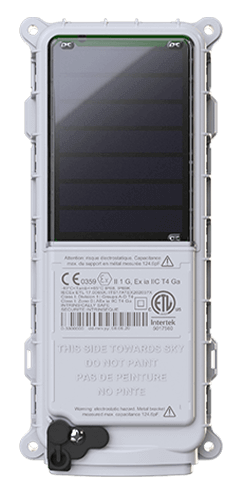 SmartOne Solar
 SmartOne C
 STX3
STX3 STX3 Dev Kit
 SPOT X
 SPOT Gen4
 SPOT Trace
The Case for Satellite in Transportation
Transportation networks have become more connected than ever, but not always more visible. Across freight, fleet, and intermodal operations, digital systems now track, route, and optimize the movement of goods in real time. Yet that visibility often breaks down in the very places where it matters most, including rural highways, cross-border routes, ports, and nearshore environments where cellular coverage is inconsistent or unavailable.
For leadership responsible for efficiency, safety, and cost control, these gaps are not just technical limitations. They represent operational risk. When visibility drops, so does the ability to make informed decisions about asset utilization, delivery timelines, and incident response.
The question is no longer whether transportation operations should be connected. It is how to ensure they remain connected everywhere they operate.
Where Visibility Breaks Down
Despite advances in cellular infrastructure, coverage is far from universal. Industry estimates suggest that more than 15 to 20 percent of land routes globally experience inconsistent or no cellular coverage, with higher gaps in rural and cross-border corridors. For fleets operating across long-haul routes, that translates into hours, or even days, of limited visibility.
At the same time, the scale of transportation operations continues to grow. In the U.S. alone, there are over 13 million registered commercial trucks, many of which operate across distributed and often disconnected environments.
Globally, supply chains are becoming more complex, with goods frequently moving across multiple modes and regions before reaching their destination.
Even short lapses in connectivity can have outsize impacts. A missed location update can delay downstream coordination. A lack of real-time data can lead to inefficient routing or underutilized assets. In higher-risk scenarios, such as hazardous material transport, gaps in communication can introduce compliance concerns. Non-compliance with Hazmat regulations alone can result in fines of up to $84,425 per violation.
The Cost of Limited Connectivity
The financial implications of these gaps are significant. Transportation inefficiencies cost the global economy hundreds of billions of dollars annually with delays, idle time, and poor asset utilization among the primary drivers.
Unplanned downtime alone can cost fleets $50 to $750 per vehicle per day, depending on the operation. When visibility is limited, identifying and resolving issues takes longer, increasing both direct and indirect costs.
Theft and cargo loss add another layer of risk. In the United States, cargo theft incidents have been rising, with estimated losses rising 60 percent to nearly $725 million. Without continuous tracking, recovery becomes more difficult, and preventive measures are harder to enforce.
These challenges are compounded in cross-border operations, where roaming limitations and inconsistent network agreements can disrupt connectivity. What appears as a seamless route on a map often involves multiple coverage zones, each with its own constraints. **
Satellite as a Continuity Layer
Satellite connectivity addresses these challenges by extending visibility beyond the limitations of terrestrial networks. Rather than replacing cellular, it complements it, ensuring that assets remain connected as they move in and out of coverage.
This continuity is particularly valuable in transportation, where assets are inherently mobile and often traverse multiple connectivity environments. With satellite-enabled IoT, location data, sensor readings, and status updates can continue to flow regardless of geography.
For executives, this translates into a more stable operating environment. Decisions can be made based on consistent data rather than intermittent updates. Exceptions can be identified and addressed in real time. Coordination across teams and partners becomes more reliable.
From Tracking to Operational Control
Historically, transportation visibility has been focused on tracking—knowing where an asset is at a given point in time. Increasingly, the focus is shifting toward control.
Two-way satellite communication enables organizations to move beyond passive monitoring. Devices can be configured remotely, reporting intervals adjusted based on operational needs, and alerts acted upon without waiting for assets to return to coverage.
This is particularly relevant in scenarios such as:
- In-transit monitoring, where conditions or routes may need to be adjusted in real time
- Container and asset tracking, where status updates must remain consistent across regions
- Fleet coordination, where communication with drivers or vehicles must be maintained regardless of location
The result is a more responsive system, one that can adapt to changing conditions rather than simply report on them.
A Strategic Advantage, Not a Redundancy
Satellite connectivity is sometimes viewed as a backup or niche solution. In practice, it is becoming a strategic component of modern transportation networks.
As supply chains become more distributed and expectations for real-time visibility increase, the ability to maintain continuous connectivity is no longer optional. It is a competitive differentiator. Organizations that can operate with consistent visibility and control are better positioned to reduce costs, improve service levels, and respond to disruptions.
This is particularly important as transportation networks face increasing pressure from labor constraints, regulatory requirements, and rising customer expectations. The margin for inefficiency continues to shrink.
Closing the Gap
Transportation does not operate within the boundaries of a terrestrial network. It operates across geographies, environments, and conditions that are constantly changing.
Closing the connectivity gap means ensuring that visibility does not depend on where an asset happens to be. It means extending communication beyond traditional limits so that operations can continue without interruption.
Satellite plays a critical role in enabling that continuity. By providing coverage where terrestrial networks fall short, it allows transportation organizations to maintain awareness, coordination, and control across their full operational footprint.
For leadership, the value is straightforward. Better visibility leads to better decisions. Better decisions lead to more efficient, resilient operations. And in a sector where margins are tight and expectations are high, that difference matters.
Learn more about how to achieve last-mile connectivity. Reach out to our team of experts.

