

 Login
Login


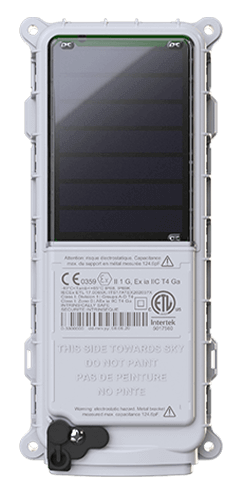 SmartOne Solar
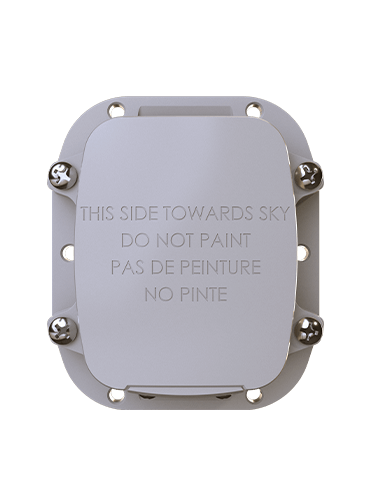 SmartOne C
 STX3
STX3 STX3 Dev Kit
 SPOT X
 SPOT Gen4
 SPOT Trace
Why Two-Way Connectivity Is the Next Evolution in Remote Monitoring
Remote monitoring has transformed how organizations operate in distributed, infrastructure-limited environments. From energy assets and logistics fleets to environmental systems and industrial equipment, connectivity has enabled visibility where none previously existed.
For years, one-way telemetry has powered that visibility, and while it still does, operation complexity heightens expectations placed on remote systems. Simple monitoring is now expanding into a demand for action, and two-way connectivity represents the next step.
The Foundation: Why One-Way Still Matters
Before exploring what two-way communication enables, it is important to recognize the continued value of one-way communication.
One-way satellite connectivity provides a resilient outbound reporting channel. Devices transmit short, efficient bursts of data at defined intervals, optimized for low power consumption and long deployment life. For many use cases, that model remains ideal.
One-way connectivity excels at:
- Scheduled location updates
- Environmental monitoring
- Alarm-based exception reporting
- Low-power asset tracking in remote regions
In remote monitoring deployments where battery life, cost efficiency, and simplicity are paramount, one-way systems continue to deliver predictable and scalable performance. They reduce blind spots across geographies where terrestrial networks cannot be relied upon.
That foundation does not disappear simply because two-way exists. In fact, it often remains the backbone of the deployment.
Where One-Way Reaches Its Limits
However, operational environments rarely remain static.
Supply chains face port congestion. Energy infrastructure experiences severe weather events. Utilities operate under evolving compliance mandates. Assets move across borders and coverage zones. Conditions shift, sometimes rapidly. In these moments, fixed reporting intervals can create delays between awareness and action.
If a device reports every twelve hours, but a disruption requires minute-by-minute visibility, operators must wait. If environmental thresholds change, but configuration cannot be adjusted remotely, field intervention becomes necessary. If a device stops reporting, confirmation is not always immediate. The gap is not in visibility itself. The gap is in responsiveness.
Two-Way Connectivity: Adding Operational Agility
Two-way communication introduces a control layer to remote monitoring. Instead of relying solely on outbound telemetry, operators can communicate back to the device. That capability unlocks new operational flexibility without fundamentally altering the core architecture.
With two-way connectivity, organizations can:
- Adjust reporting frequency during delays or emergencies
- Reconfigure device parameters remotely
- Modify alert thresholds based on conditions
- Trigger diagnostics or status confirmations
- Acknowledge and confirm receipt of critical messages
- Extending monitoring into control
These capabilities reduce uncertainty. They also reduce the need for physical intervention.
In logistics, this might mean increasing check-in intervals during a port disruption. In energy operations, it may involve reconfiguring reporting behavior during a storm event. In utilities, it can support regulatory compliance by enabling secure command acknowledgment and configuration updates without dispatching technicians.
Two-way does not replace high-bandwidth terrestrial links. Rather, it provides a resilient command channel that remains available when other infrastructure is degraded or unavailable.
Efficiency Without Sacrificing Simplicity
One concern organization's often raise is whether two-way communication increases complexity or power consumption. The answer depends on architecture.
The most effective deployments layer capabilities thoughtfully. Routine telemetry continues in low-power mode. Two-way capability is used selectively — for exceptions, configuration updates, and critical confirmations.
This hybrid approach preserves the strengths of one-way systems:
- Long battery life
- Predictable data usage
- Cost-efficient scaling
While adding flexibility when operational risk demands it. Instead of choosing between simplicity and control, organizations gain both.
From Visibility to Resilience
The broader shift underway is strategic.
Remote monitoring initially solved a visibility problem. But today’s distributed operations require resilience. That means ensuring that systems continue to function, adapt, and communicate under changing conditions.
Two-way connectivity strengthens resilience by shortening the loop between insight and allows actions remotely. It reduces the lag between detection and intervention. It enables remote configuration rather than manual correction. And it supports evolving compliance and operational requirements without hardware replacement.
Two-way connectivity also enables a more intelligent model for remote monitoring by bringing computing capabilities closer to the edge. Many modern devices are no longer simple sensors that transmit raw data. Instead, they incorporate onboard processing that can analyze conditions locally, detect anomalies, and trigger event-based communications. Instead of sending continuous data streams, edge devices can process information in real time and transmit only meaningful updates or alerts. When paired with two-way satellite connectivity, this architecture allows operators not only to receive insights from the field but also to respond immediately by adjusting configurations, updating reporting intervals, or initiating correction actions remotely. The result is a tighter operational loop between detection and response, improving resilience while maintaining efficient use of bandwidth and power.
The Next Phase of Remote Systems
As infrastructure becomes more automated and assets more intelligent, connectivity must support more than passive reporting. It must enable controlled adaptation.
Two-way connectivity represents that progression. Not as a replacement for one-way efficiency, but as an extension of it. Organizations that embrace this layered model, maintaining reliable outbound telemetry while enabling selective inbound control, position themselves to operate with greater confidence in unpredictable environments.
Because in remote monitoring, knowing is powerful. But being able to respond is transformative.
Learn more at globalstar.com.

